Use a clamp monitor when the appliance cannot go through a plug meter

Product feature overview

A clamp power monitor for hard wired appliance use is worth considering when you need a visible reading from a fixed electrical load rather than a socket appliance. In practical terms, that means you are trying to see voltage, current, watts and accumulated kWh for something such as an immersion heater, workshop circuit, outbuilding supply, pump, heater or other fixed installation. The immediate decision is simple: if the thing you want to measure has a normal 13 amp plug, a plug-in monitor may be easier; if it is wired into a circuit, a CT clamp and meter-style display may be the more relevant product category.

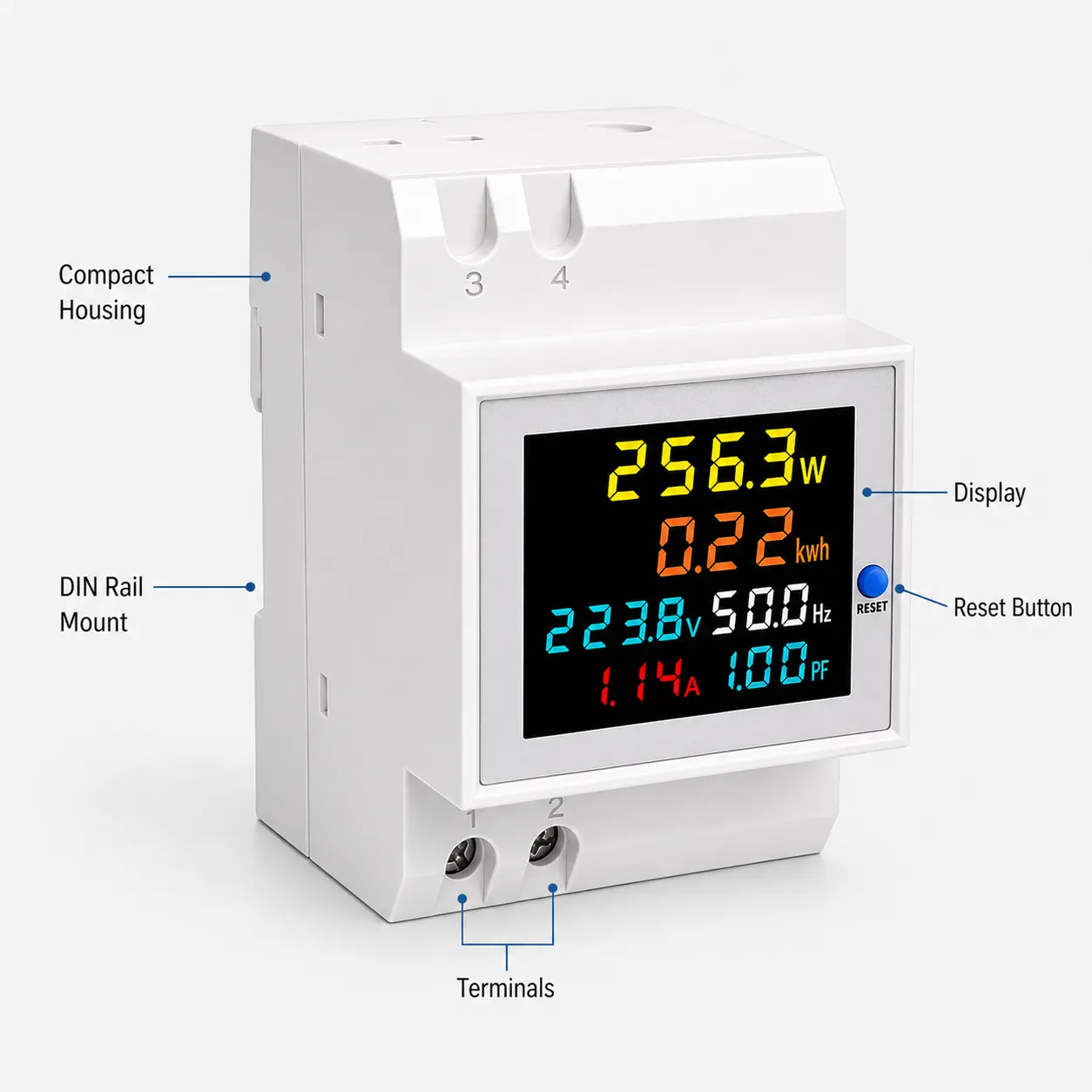
The KETOTEK single phase energy meter described here is a DIN rail kWh meter with an external current sensor module. Its documented display covers voltage from AC 40.0-300.0V, current from AC 0-100.0A, electric power from 0-30000W, energy from 0-99999kWh, frequency from 45.0Hz-65.0Hz and power factor from 0.00-1.00PF. Those facts make it a monitoring and display device for understanding load behaviour. They do not make it a substitute for electrical competence, a legal billing system, or a full smart-home energy platform.

Put the reading where the UK problem actually happens

In a Bristol garage workshop, a London basement plant room, a Birmingham rental conversion or a farm outbuilding outside York, the frustration is rarely that the user has no energy data at all. The problem is that the available data is too broad. A smart meter display may show the whole property rising and falling, while the appliance or circuit causing the question remains hidden. A clamp-style monitor is attractive because it narrows the job from “what is my house using?” to “what is this load doing?”

That narrower question matters because different buyers are solving different problems. A homeowner may want to know whether an immersion heater is running for longer than expected. A small workshop owner may want a local view of a fixed machine circuit. A landlord or mixed-use premises manager may want a transparent kWh reading for a separate area, while still understanding that tenancy terms and energy resale rules sit outside the meter itself. The monitor helps with visibility; it does not decide what is fair, lawful or safe.

Check the documented numbers before you assume compatibility

The useful starting point is the meter’s stated measurement range. The documented voltage range is AC 40.0-300.0V, which fits the broad single phase context described in the product title, but the buyer still needs to confirm the installation is appropriate. The documented current range is AC 0-100.0A, and the power range is 0-30000W. These figures are reference limits for the product, not permission to install it on any circuit without checking the wiring, protection, enclosure and local electrical requirements.

The display is described as showing six measurement parameters at the same time: voltage, current, electric power, energy, frequency and power factor. That matters because amps alone do not always answer the bill question. kWh is the unit that maps most directly to energy consumption over time, while watts show the present load. Power factor can also be useful for buyers who are comparing electrical behaviour rather than just spotting whether something is on or off. The documented energy counter range is 0-99999kWh.

Separate instant load from accumulated kWh before drawing conclusions

For a hard-wired appliance, the most common mistake is to look at an instant watts reading and treat it as the full story. A heater may show a high load while it is actively heating, but the bill impact depends on how long it runs. A pump may cycle. A workshop tool may have peaks that do not represent steady consumption. The useful reading sequence is to look at watts for the live load, then use the kWh value over a meaningful period to understand the total energy used.

The documented meter can save the electric energy value when power is off, then continue accumulating when measurement power is reconnected. That is useful when the job is to compare a circuit over time rather than only catch a moment. There is also a reset function: the product copy states that pressing the reset button for five seconds resets the AC voltage meter. In practice, buyers should treat reset behaviour carefully and keep a manual note of readings if they are comparing days, tenants, work periods or appliance running patterns.

Know the mismatches before buying for a fixed circuit

This type of device is not the right answer for every electricity question. It is not a plug-in appliance monitor for a kettle, tumble dryer or computer plugged into a wall socket. It is not described as a smart thermostat, tariff optimiser, app-based monitoring ecosystem or remote automation tool. It is also not documented here as a certified billing-grade meter. If your main need is formal tenant billing, legal evidence, tariff management or export accounting, you need to check those requirements separately rather than relying on a product display alone.

Safety is the other clear boundary. A CT clamp and DIN rail meter still sit around mains electrical work, and hard-wired circuits are not a casual DIY setting for many buyers. If the target is inside a consumer unit, distribution board, workshop panel or outbuilding supply, a competent electrician should be involved. The product facts mention high quality ABS flame retardant material and high precision chips, but that does not remove the need for correct installation, enclosure, cable selection, circuit isolation and safe working practice.

Use this workshop checklist before fitting or asking an electrician

For a practical check at a Sheffield maker studio, packing bench or small workshop, start by naming the exact load you want to understand. Is it one hard-wired appliance, one circuit, or a separate area? Next, confirm that the monitoring job is single phase and within the documented ranges: AC 40.0-300.0V, AC 0-100.0A and 0-30000W. Then decide which number answers your question: watts for the live draw, kWh for usage over time, frequency if you need supply context, and power factor if the load behaviour matters.

A sensible working checklist is: identify the circuit; confirm it is not easier to measure with a plug-in meter; check the meter location has a suitable DIN rail arrangement; confirm the external current sensor can be placed correctly by a competent person; make sure the display will be readable where it is installed; record the starting kWh value; run the appliance or area through a normal work period; record the ending kWh value; compare that usage with the question you were trying to answer. Keep the checklist tied to documented facts rather than assumptions about accuracy, savings or payback.

Use extra caution with solar, batteries and heat-pump questions

For solar PV, battery storage, heat-pump or self-consumption questions, a clamp monitor can be a useful local instrument, but it should not be overclaimed. The documented meter shows voltage, current, watts, kWh, frequency and power factor. Those readings can help a technically minded homeowner see how a particular circuit behaves, such as an ASHP circuit or a fixed load being considered for a different running pattern. The monitor may fill a gap between a vague listed app and a full energy management system.

The limit is interpretation. Solar and battery systems involve import, export, self-consumption, inverter data and sometimes direction-sensitive measurement design. The supplied facts do not state that this product performs export accounting, battery optimisation or full PV monitoring. If your question is “how much does this circuit use?”, the meter category may fit. If your question is “what is my precise self-consumption across the whole solar and battery system?”, you may need a broader monitoring design and installer advice.

Handle landlord, outbuilding and shared-supply readings transparently

In a Manchester house split into a workshop and living space, or a rural outbuilding sharing one incoming supply, a visible kWh reading can reduce argument because it gives people a number to discuss. The product’s kWh display is the important part here: kWh is the unit people recognise from electricity bills, so it is more useful for shared-use conversations than vague estimates. For a separate area, record readings at agreed intervals and keep the method consistent.

The caution is that monitoring and charging are not the same thing. The available facts support describing this as a meter/display device, not as a legal billing solution. A landlord, tenant, property operator or workshop sharer should check agreements, listed costs and UK rules before treating any reading as the basis for payment. If tenant acceptance matters, agree the reading process before fitting the device, keep records simple, and do not imply the product itself settles legal or tariff questions.

Choose it when the next step is clearer measurement, not guesswork

This product is most relevant when the buyer has a concrete fixed-load question and wants a local display rather than another broad household graph. The documented facts are strongest around visible multi-parameter monitoring: voltage, current, watts, kWh, frequency and power factor on one interface, with a backlit colour LCD display and a stated 178 degree viewing angle. The energy value being saved after power off also suits a buyer who wants accumulated usage rather than only a snapshot.

The grounded next step is to write down the circuit, the decision you need to make, and the number that will settle it. If you need kWh over a week for an outbuilding, plan a reading log. If you need live watts for a fixed heater, plan a safe observation period. If installation touches a consumer unit or fixed wiring, involve a qualified electrician. The listed price is £23.59 with VAT included, and the supplied commerce details state Free UK Delivery, 1-3 business days processing and 2-4 business days delivery after dispatch.